Refrigerator Leaking Water? How to Tell What Actually Failed
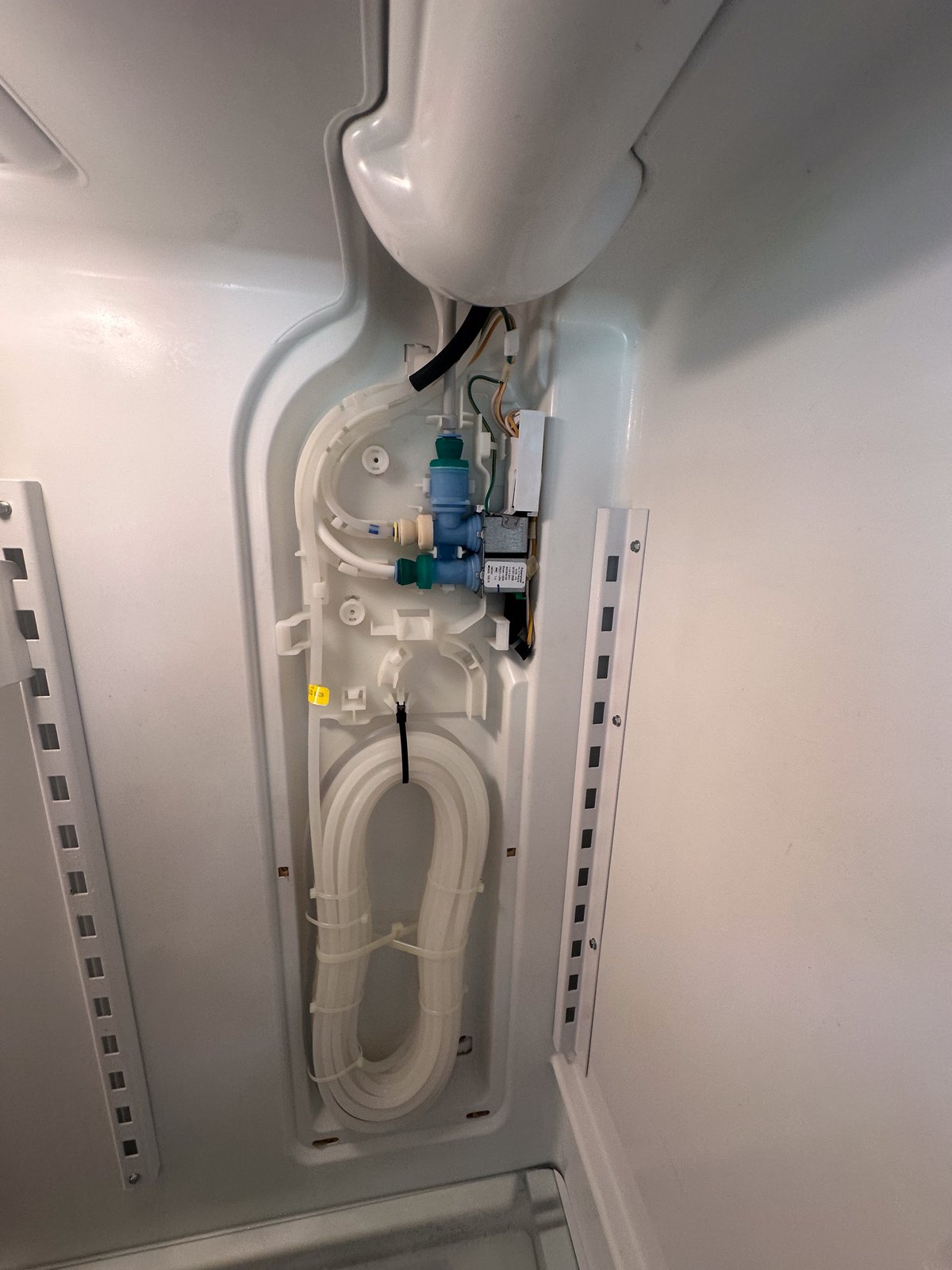
Table of Contents
- 1. Start Here: Is It Actually the Refrigerator?
- 2. What the Location of the Water Tells You
- 3. The Clogged Defrost Drain, and Where It Actually Is
- 4. The Water Inlet Valve, Supply Line and Dispenser Tubing
- 5. Door Seals, the Drain Pan and a Fridge That Is Not Level
- 6. Why This Comes Back More Often in the Tri-Valley
- 7. What Each of These Costs in Livermore and the Tri-Valley
- 8. What to Try Yourself, and When to Call
- 9. Where We Work and What Else We Fix
- 10. Frequently Asked Questions
There is water under your refrigerator, or pooling under the crisper drawers, and you want to know whether this is a twenty minute job or a new appliance.
In rough order of how often we find them: a clogged defrost drain, a leaking water inlet valve or supply line, a door seal that is letting warm air in, a cracked or overflowing drain pan, and a refrigerator that is simply not level. Almost all of those sit well under $350 to fix here.
But before any of that, there is a step every troubleshooting guide we have read skips entirely: confirm the water is coming from the refrigerator at all. A real share of the calls we take for a leaking fridge turn out to be the dishwasher beside it, the house supply line behind it, or condensation on a hot day. Those are different trades and different bills, and you can rule them out in about five minutes.
Before you start: if water is visibly running rather than pooling, shut off the refrigerator's water supply first. It is usually a quarter turn valve behind the unit or under the kitchen sink. Then unplug the refrigerator, or switch off its breaker, before you put your hands behind or underneath it.
Start Here: Is It Actually the Refrigerator?
This takes five minutes and it is the difference between a repair and a wasted service fee.
Dry the floor completely and put down a sheet of paper towel. Not a cloth. Paper shows you where water reappears first and in what shape. Leave it an hour with nothing else running in the kitchen.
Then work through these:
- Is the dishwasher next to the refrigerator? Run a short cycle with the floor dry and watch. A dishwasher door seal or drain hose leak shows up as water at the front edge of the cabinet run and is very easily blamed on the fridge. If that is what you find, our page on dishwasher repair covers it.
- Pull the refrigerator forward and look at the supply line. There is a small plastic or copper line feeding the ice maker and dispenser. Dry it, then feel along it, especially at the connection and at any saddle valve. A weeping compression fitting drips slowly and lands behind the unit, not under the front.
- Is the water clean or is it dirty? Clean water points at the supply line, the inlet valve or melted frost. Water with food debris or a faint smell points at the defrost drain, which collects everything that falls to the bottom of the compartment.
- Is it warm out and is the water only on the outside of the doors? That is condensation, not a leak. It happens on humid days and on units set colder than they need to be.
The direction of the water tells you most of it. A refrigerator fault usually puts water inside the compartment, under the crisper drawers or on the floor directly beneath the unit. Water appearing in front of the cabinets, along a wall, or near another appliance usually came from somewhere else.
If you are not sure after that, call us at (925) 667-3597 and describe what you saw. We would rather tell you to call a plumber on the phone than charge you for a visit that cannot fix anything.
What the Location of the Water Tells You
Once you know it is the refrigerator, where the water shows up narrows the cause very quickly.
| Where you see the water | Most likely cause | Rough cost here |
|---|---|---|
| Pooling under the crisper drawers, inside | Clogged defrost drain | $150-$300 |
| Running down the inside rear wall | Clogged defrost drain or heavy frost | $150-$300 |
| On the floor directly under the unit | Overflowing or cracked drain pan, or the drain tube missed the pan | $155-$280 |
| Behind the unit, clean water | Water inlet valve or supply line | $125-$315 |
| Under or around the door dispenser | Dispenser tubing or filter housing | $175-$250 |
| In the freezer, ice sheet on the floor | Clogged defrost drain at the freezer end | $150-$300 |
| Sweating on the outside of the doors | Condensation or a failed door seal | $0-$375 |
Two of those rows deserve more than a line, because they account for most of what we actually find.
The Clogged Defrost Drain, and Where It Actually Is
This is the single most common cause, and it is the one where the published advice is most confusing. Three of the pages currently ranking for this problem give three different locations for the same drain. They are each describing a different part of one path, which is why none of them matches what you see when you open the door.
Here is the whole path. Your refrigerator periodically melts the frost off its evaporator coils. That meltwater runs into a trough under the coils, down a short drain tube, and into a shallow pan sitting on top of the compressor at the back, where the compressor's heat evaporates it. Nothing about that is visible from inside the fridge in normal use.
Where the opening is depends on the layout:
- Top freezer and side by side: at the bottom of the freezer compartment, behind the rear panel, below the evaporator coils. You have to unload the freezer and take out a panel held by a few screws to see it.
- French door and bottom freezer: at the back of the freezer compartment floor, usually under a removable cover, with the coils behind the rear wall above it.
- What you see as a customer: on most units, nothing. The puddle under the crisper drawers is water that backed up and found its way forward along the floor of the fresh food compartment. The drain itself is behind a panel.
When it clogs, the trough fills, the water overflows the front lip, and it runs down the inside rear wall and forward under the drawers. In a freezer it freezes into a flat sheet on the floor before it gets that far.
The clog is almost always food debris and biofilm, not mineral scale. Crumbs, a piece of lettuce, the sticky residue from a spilled drink. It builds slowly and then blocks completely.
Can you clear it yourself? Sometimes. If you can reach the drain opening, warm water flushed down it with a turkey baster clears a soft clog, and a length of soft tubing will push through a stubborn one. What we would ask you not to do is force anything stiff or sharp into the opening. The drain tube is thin plastic and the evaporator coils sit directly behind it, and a punctured coil turns a $200 job into a sealed system repair. If the drain is behind a panel you would have to take off, or if it clears and then clogs again within a few months, there is usually a kinked or collapsed drain tube behind it and that is worth having looked at.
The Water Inlet Valve, Supply Line and Dispenser Tubing
If the water is clean and it is showing up behind the unit, this is where it is coming from. Every refrigerator with an ice maker or a door dispenser has a water inlet valve, usually at the lower back of the cabinet, and on many units a second run of tubing up into the fresh food compartment.
How to tell them apart:
- The valve itself leaks when it fails to seat fully. The giveaway is a slow drip that is worse right after the ice maker fills, and a small persistent damp patch directly under the valve body.
- A compression fitting weeps at the connection to the house supply. Dry it completely, wrap a paper towel around the joint and check it in an hour. A wet towel with a dry valve body above it means the fitting, not the valve.
- The plastic tubing splits, usually where it has been pinched by the refrigerator being pushed back against the wall. This one often appears right after someone cleaned behind the fridge.
- The filter housing drips after a filter change, almost always because the new filter is not seated or the old O ring stayed behind.
One caution on the house side. If the leak is upstream of the refrigerator's own connection, at a saddle valve tapped into a copper pipe for instance, that is plumbing rather than appliance work. Saddle valves in particular are notorious for weeping years after installation, and replacing one properly with a quarter turn valve is a plumber's job.
Door Seals, the Drain Pan and a Fridge That Is Not Level
Three smaller causes that between them explain most of what is left.
The door seal. A gasket that no longer seals lets warm, humid air into the compartment. That air condenses on the cold surfaces, and you get both heavy frost on the coils and water running down the inside walls. The common test is to close the door on a dollar bill and pull: if it slides out easily, the seal is weak at that point.
That test is right as far as it goes, and most guides stop there. What they do not tell you is that a gasket is more often dirty, stiff or distorted than it is worn out. Clean it with warm soapy water, including the folds. A gasket that has gone stiff in the cold will often reseat after being warmed with a hair dryer on low and pressed back into shape. Check the hinges too, because a sagging door makes a perfectly good gasket fail at the top corner. Replace the gasket when it is torn, permanently deformed, or still failing the bill test clean.
The drain pan. The shallow pan over the compressor is supposed to evaporate the meltwater. It cracks, it gets knocked out of position when a unit is moved, and on an old refrigerator it silts up. If the water on your floor is under the back of the unit and the inside of the fridge is dry, look here first.
Level. A refrigerator should sit very slightly higher at the front so the doors swing closed and the internal drain path runs the right way. If the unit was moved, or the floor is uneven, meltwater can run forward instead of into the drain. This is free to fix with a spirit level and the adjustable front feet, and it is worth checking before you spend anything.
Why This Comes Back More Often in the Tri-Valley
This is the part no national guide can write for you, and it is the reason a fix that should last five years sometimes lasts two here.
Livermore municipal water runs 213 to 287 ppm calcium carbonate, which the City classifies as moderately hard to very hard. Everything in your house that moves water is dealing with that, and in a refrigerator it lands in three specific places:
- The water inlet valve. Scale builds on the valve seat until it can no longer close completely. The result is exactly the slow, intermittent drip described above. This is the most common hard water failure we see in refrigerators, and it is why a valve here does not last as long as the same part would in a soft water market.
- The fill tube to the ice maker. Mineral deposits narrow it, ice forms around the restriction, and water backs up and overflows the mold. If your ice cubes have gone small, cloudy or hollow and there is now water in the freezer, those two symptoms have one cause.
- The filter housing seals. Scale on the sealing surface stops a new filter seating cleanly, which is why a leak that starts the day after a filter change is so common here.
What does not come from hard water is the defrost drain clog. That one is food debris, and it happens at the same rate everywhere. We mention it because advice to descale a refrigerator gets offered as a fix for leaks it will not touch.
If you have a water softener, keep it maintained. If you do not, expect the inlet valve and the fill tube to be the parts that go, and budget for them rather than being surprised. The same mineral load is why dishwasher spray arms and heating elements scale up in this area, which we covered in more detail alongside a washing machine that will not drain.
What Each of These Costs in Livermore and the Tri-Valley
National cost guides are real figures for the whole country, including markets where a technician's overhead is a fraction of what it is here. The right hand column adjusts for Bay Area labor, and it is where our own quotes usually land.
| Repair | National range | Tri-Valley range |
|---|---|---|
| Clearing a clogged defrost drain | not separately listed | $150-$300 |
| Water inlet valve | $100-$250 | $125-$315 |
| Dispenser and ice maker tubing | $140-$200 | $175-$250 |
| Household water supply line | $275-$550 | $345-$690 |
| Door gasket or seal | $100-$300 | $125-$375 |
| Drain or drip pan | $125-$225 | $155-$280 |
| Defrost heater | $120-$400 | $150-$500 |
| Ice maker repair | $100-$225 | $125-$280 |
| Diagnostic visit | $70-$130 | $80-$165 |
The good news about leaks specifically: almost every cause on this list is a cheap repair. Leaks are not the expensive refrigerator failure. The expensive one is the sealed system, where Consumer Reports puts the median compressor repair at $562, and that work does not present as water on your floor.
The 50 percent test still applies. If a quote comes back above half the cost of a comparable new refrigerator, replacement is usually the better decision. For the repairs above, on a unit under ten years old, that almost never happens. We go into the full picture in our guide to what appliance repair costs in Livermore and the Tri-Valley.
What to Try Yourself, and When to Call
We would rather you fixed the free ones without us.
Worth doing yourself:
- Run the paper towel test to confirm the water is actually the refrigerator.
- Check the unit is level, slightly higher at the front.
- Clean the door gasket properly and warm it back into shape.
- Reseat the water filter, or refit the old one, if the leak started after a filter change.
- Flush the defrost drain with warm water if you can reach the opening without removing a panel and without forcing anything into it.
Worth calling about:
- The drain is behind a panel, or it clears and clogs again within months
- Clean water behind the unit that you have traced to the valve or a split line
- Any leak you cannot locate after the checks above
- Water in the freezer plus small or cloudy ice cubes
- Frost building on the rear wall as well as water, which usually means the seal or the defrost system rather than the drain
- Anything involving a saddle valve or house pipework, which is a plumber rather than us
Dr. Appliance has been repairing refrigerators across Livermore and the Tri-Valley for over 20 years. We are licensed and insured, we stock the common inlet valves, gaskets and drain components on the vans, and most of these leaks are finished on the first visit.
Call (925) 667-3597 and tell us three things: where the water is, whether it is clean or dirty, and whether the ice maker has changed at all. That is usually enough for us to arrive with the right part.
Where We Work and What Else We Fix
We handle refrigerator and freezer repair for French door, side by side, top freezer and built in units, including Sub-Zero, Viking, Thermador and Miele alongside the mainstream brands. We also cover washer and dryer repair, dishwasher repair, oven, stove and range repair and microwave repair. Browse all of our services, read more about our residential appliance repair, or see what we do across appliance repair in Livermore and appliance repair in Pleasanton. We also provide commercial appliance repair services for restaurants, laundromats, hotels and property managers across the Tri-Valley.
Our service area covers Livermore, Pleasanton, Dublin, San Ramon, Danville, Tracy, Castro Valley, Fremont, Walnut Creek and the surrounding East Bay. You can also reach us through our Contact us page.
If a leak is not your only symptom, our guide to signs your refrigerator or freezer needs repair covers the wider set of warning signs worth acting on early.
Sources: national repair cost ranges from HomeGuide's refrigerator repair cost guide; median compressor repair figure from Consumer Reports; water hardness figures from the City of Livermore Water Quality report.
Frequently Asked Questions
Ready to Schedule a Repair?
Dr. Appliance provides fast, professional appliance repair for homes and businesses throughout Livermore and the Tri-Valley.